Purple Orchid Care Guide
About Purple Orchid
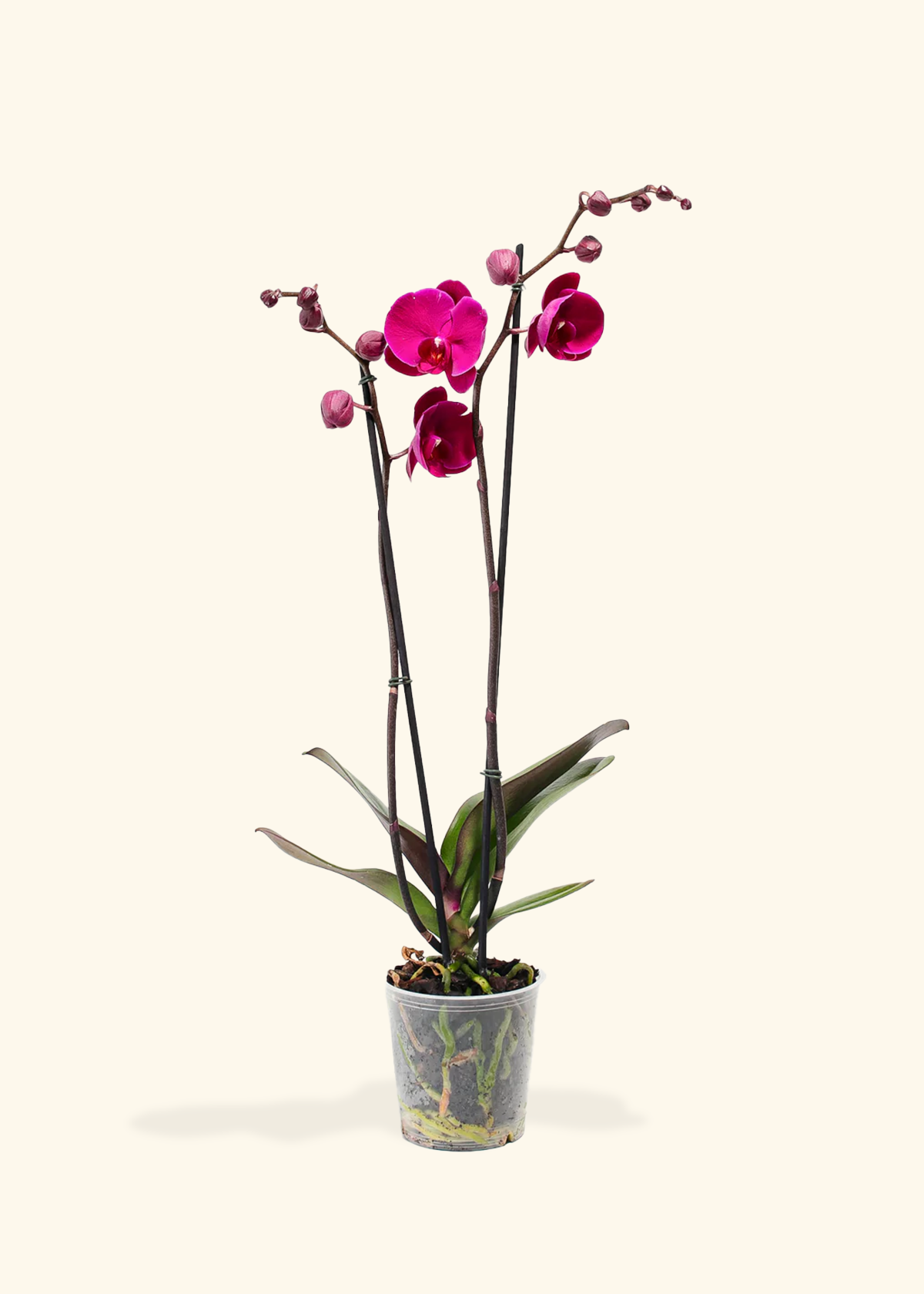
Meet the dramatic Purple Phalaenopsis Orchid, carefully grown for long-lasting beauty. Undeniably elegant, this striking flowering plant adds bold colors and style to any indoor space. From soft lavender hues to bold, deep lilac tones, the purple orchid is prized for its vividness and graceful form. Whether styled as a statement plant or part of a curated flower display, purple orchids bring instant luxury to home décor.
This tropical plant is native to Australia and Southeast Asia. It is commonly known as the purple moth orchid, as its blooms resemble butterflies in mid-flight, floating delicately above thick, glossy leaves. The purple orchid flower appears in a range of shades, from light purple orchid tones to richly saturated dark purple hues. Moth orchids come in various other colors, including yellow, pink, white, and multicolored ones.
The purple orchid is best grown indoors. However, this houseplant can thrive outdoors in USDA hardiness zones 10–12. It is beginner-friendly due to its low-maintenance needs.
The purple orchid's meaning is associated with royalty, admiration, respect, and success. These plants are often chosen for celebrations, achievements, and refined gifting. Orchids are generally non-toxic, making them a pet-friendly choice for most households.
Orchid Benefits
- Purifies indoor air, removing pollutants
- Makes a meaningful and impressive gift
- Boasts minimal care requirements
- Blooms for weeks or even months at a time
- A pet-safe flower, ideal for homes with pets
Purple Orchid Care: Growing Tips
The purple Phalaenopsis orchid is a low-maintenance plant that will reward you with its blooms with very little attention on your part. With stable light, moisture, and warm temperatures, this orchid thrives and reblooms reliably.
Purple Phalaenopsis Orchid: Light Requirements & Temperature
- Light: Bright, indirect light is ideal for vibrant blooms. Low light may reduce flowering, while direct sunlight can scorch your purple orchid’s glossy leaves.
- Temperature: Maintain temperatures between 65 and 80°F. Consistent warmth encourages healthy growth and long-lasting flowers.
Purple Orchid: Watering & Humidity
- Watering: Water your purple Phalaenopsis orchid once every 10 days. Allow the topsoil to dry slightly between waterings. Good drainage is essential.
- Humidity: Moderate humidity of 40–60% are ideal. Use a pebble tray or group plants together to maintain the right humidity levels.
Purple Orchid: Soil, Fertilizer, and Repotting
- Soil: Plant your purple orchid in well-draining and nutrient-rich soil mixed with orchid bark. This supports healthy roots and prevents moisture buildup that leads to root rot.
- Fertilizer: Feed monthly with a diluted orchid fertilizer during the active growing season.
- Repotting: Repot your purple orchid plant every 1–2 years or when it outgrows its pot, always after blooming finishes.
Purple Phalaenopsis Orchid: Propagation
Orchid propagation is done by separating the baby plants, known as keikis. Once roots form, the keiki can be removed and planted separately, creating new purple moth orchids.
Purple Moth Orchid: Common Problems
Overwatering is the most common issue in Phalaenopsis orchid care, so proper drainage is critical to prevent your plant from dying. Orchid plants can exhibit signs of underwatering, resulting in wrinkled leaves. Cut off gently wilted flowers and damaged foliage to promote new growth. With consistent moth orchid care, most problems are easily managed.
Purple Phalaenopsis: Companion Plants & Placement Options
The dramatic tones of purple orchids pair beautifully with lush green and textured foliage. Whether you prefer a flowery focal point or want to create a blooming plant display, the purple Phalaenopsis orchid is a timeless favorite that offers versatile placement options.
Great to Place On
Entryway consoles, coffee tables, office desks, or bright shelves with filtered light make ideal locations for your purple Phalaenopsis orchid.
Purple Phalaenopsis Orchid Grows Well With
- Peace Lily: The popular Peace Lily complements the bold colors of the Purple orchid effortlessly.
- Calathea Rattlesnake: The Rattlesnake plant has a striking leaf pattern that adds visual interest to any room.
- Black Anthurium: Pair your Purple Orchid with the dramatic Black Anthurium for the ultimate flowering plant display.
Get a Purple Orchid at Hey Rooted Today!




 Care level: No sweat
 Light: High
 Pet friendly
 Water: Once a week


