About Yucca Cane
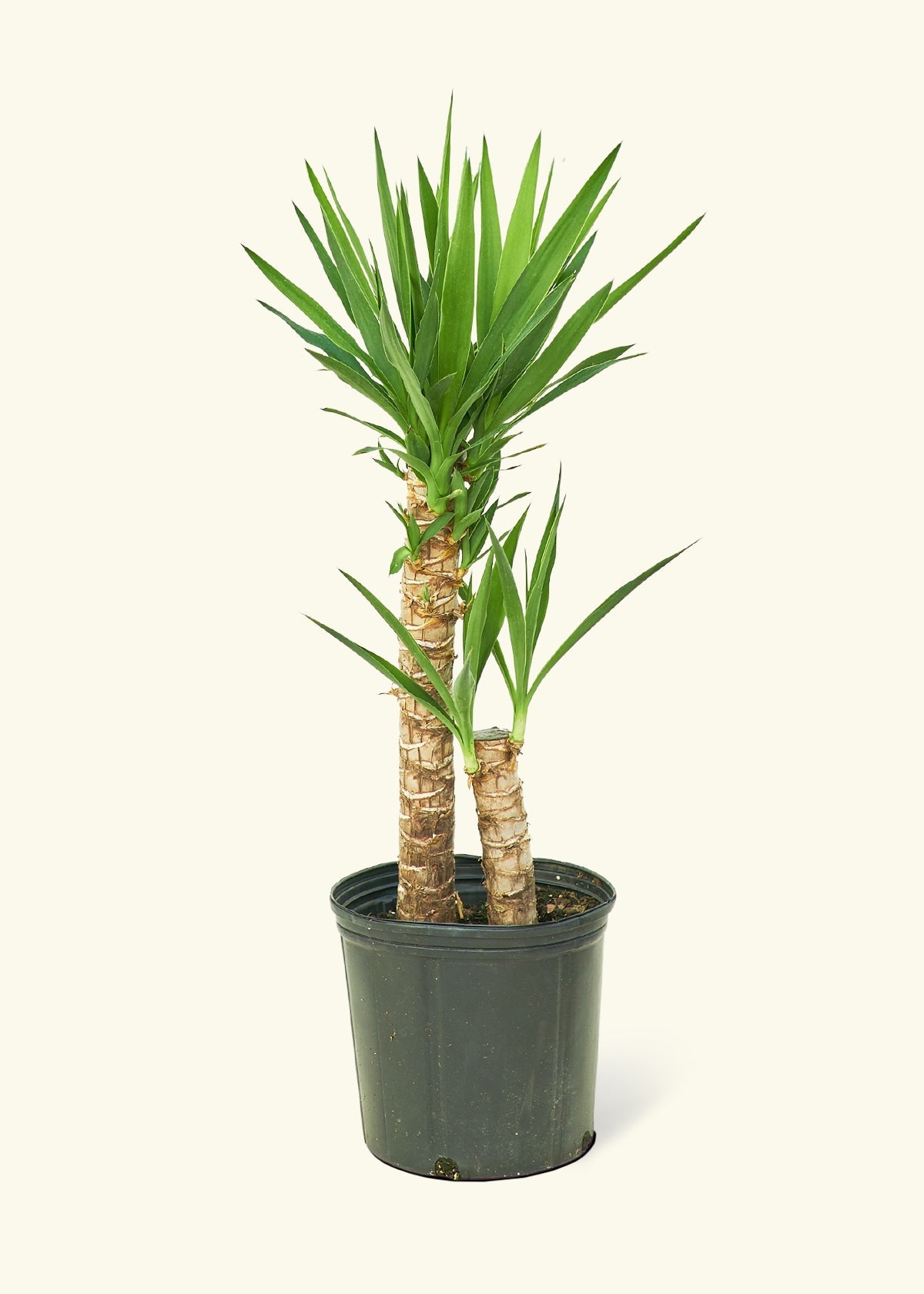
The Yucca Cane (Yucca gigantea) is a type of succulent with a thick, woody trunk. It belongs to the Asparagaceae family and thrives in seasonally dry tropical regions, USDA hardiness zones 9-11. Native to Mexico and other Central American countries, the Yucca tree is also known as Spineless Yucca or Elephant-foot Yucca. Its vibrant green, sharp, sword-blade foliage forms a dense rosette at the top of the trunk. Considered a slow-grower, an indoor Yucca plant can reach up to 3m in height.
Yucca tree care is straightforward once you understand this succulent’s needs. Remember that these spectacular plants are toxic to pets.
Yucca Cane symbolizes abundance, protection, resilience, and longevity.
Yucca Cane Plant: Benefits
Yucca Cane Plant Care: Growing Tips
Caring for a Yucca gigantea is easy. This houseplant is hardy and unpretentious. See below for our expert tips on how to care for a Yucca plant:
Yucca Plant: Light Requirements & Temperature
- Light: Yucca trees are full-sun plants, requiring at least 2-3 hours of direct sunlight. If grown outdoors, it can thrive in partial shade.
- Temperature: Temperatures of 60°F-80°F are ideal. Bring it indoors at the end of summer.
Yucca Cane Plant: Watering & Humidity
- Watering: The Yucca Plant is a drought-tolerant succulent that needs infrequent watering. Allow the soil to dry out completely before you water it again.
- Humidity: This plant thrives in the dry regions of Mexico, so it doesn’t need extra humidity.
Yucca Cane: Soil, Fertilizer, and Repotting
- Soil: Use chunky, well-draining soil for the best results. A cactus or succulent mix is an ideal option.
- Fertilizer: Yucca plants should be fertilized monthly in the growing season. These large plants are light feeders; thus, dilute the plant food to half strength.
- Repotting: Repot your Yucca plant every 2 years or when it outgrows its container. Ensure the pot has enough drainage holes.
Yucca: Propagation
The easiest Yucca propagation method is by separating the offsets (pups) and planting them directly in moist but well-draining soil. You can also grow new Yucca Cane plants by cutting part of the top (using the stem- or trunk-cutting technique). Remove the bottom few leaves and leave the cutting to callous for a couple of days. Then plant in soil to root.
Yucca Cane: Problems and Pruning
Common Yucca Cane problems include overwatering that can lead to rot. This drought-resistant, low-water succulent requires the soil to dry completely. Clean the leaves when needed and remove dead foliage. Trimming is minimal. So, how do you prune a Yucca plant? Cut brown leaves and remove flower stalks after blooming. Wear gloves as the leaves are quite sharp.
Yucca Tree: Companion Plants & Placement Options
The Yucca tree makes a great statement both indoors and outdoors. It will surely bring exotic vibes to your living space.
Great to Place on
A large Yucca Cane makes an excellent floor plant in a bright corner. Also, its low-maintenance needs make a Yucca tree ideal for office spaces. If you live in a warmer climate, you can place your Yucca Cane outdoors.
Yucca Plant Grows Well With
For a more manageable tropical garden, combine your Yucca gigantea with other low-maintenance, full-sun, and low-water houseplants:
- Aloe Vera: Pair your towering Yucca with the classic and popular Aloe Vera (Aloe vera) for the ultimate layered display.
- Ponytail Palm: The Ponytail Palm (Beaucarnea recurvata) is not a true palm but a drought-tolerant succulent, just like the Yucca tree.
- Australian Umbrella Tree: The stunning Australian Umbrella Tree (Schefflera amate) requires the same light conditions as the Yucca Cane plant.
Buy Yucca Plant for Sale From Hey Rooted Today!




 Care level: No sweat
 Light: High
 Not pet friendly
 Water: Twice a month


