Sansevieria Laurentii Care Guide
About Sansevieria Laurentii
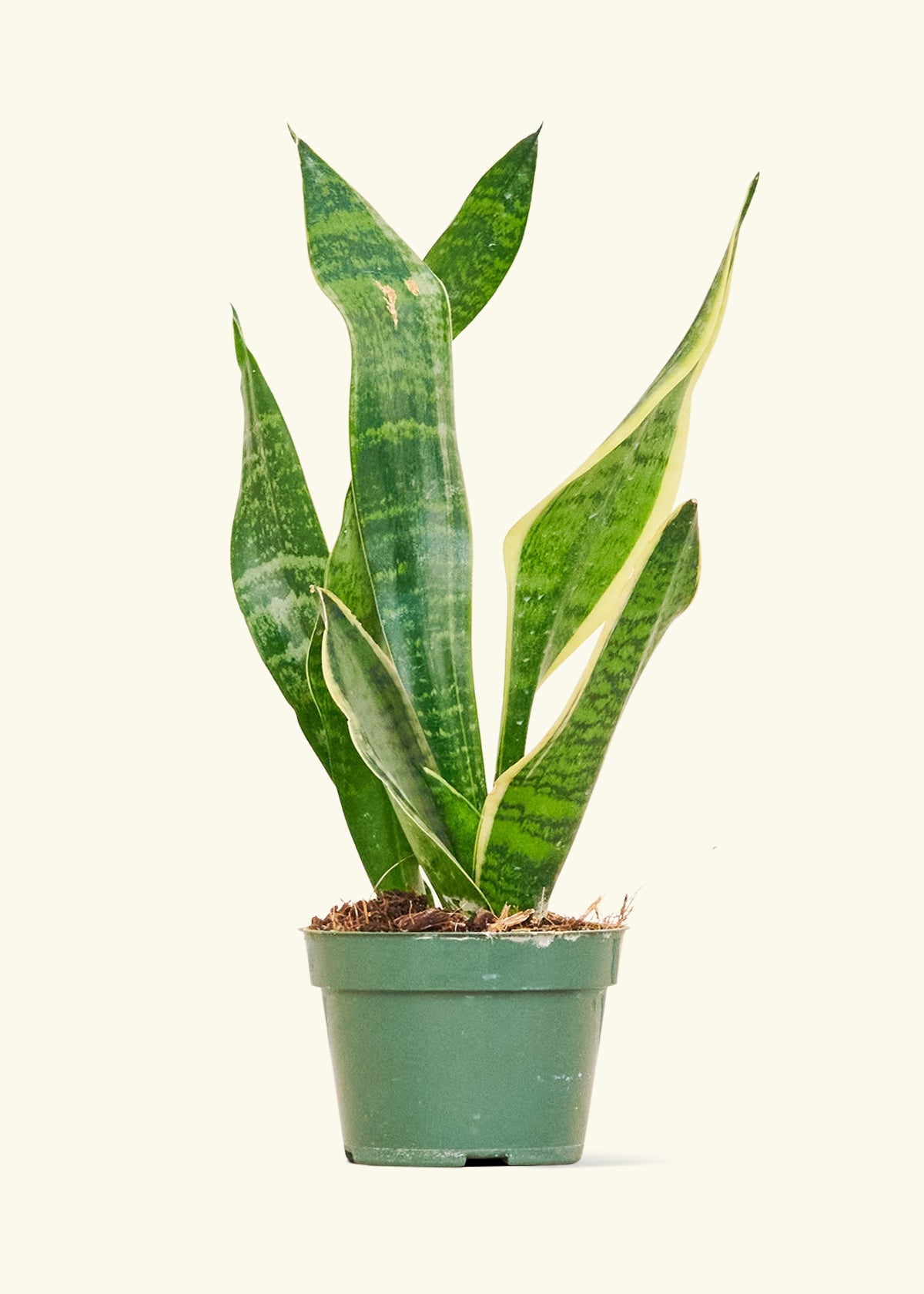
The Snake Plant Laurentii (Sansevieria laurentii) is a tough succulent with thick, sword-shaped leaves characterized by a sunny yellow stripe on the edges. The Sansevieria Laurentii plant can also be found under its new botanical name, Dracaena trifasciata Laurentii, since its recent reclassification into the Dracaena genus.
Native to Central Africa, it’s one of the best-selling houseplants because of its low maintenance needs and adaptability. This tropical plant thrives in USDA hardiness zones 9-11. Available in small to large sizes from our website, this hardy plant is known for its longevity, living over 25 years. It’s one of the easiest plants to care for. Keep it out of your pet’s reach, however, since it contains oxalate crystals that can irritate if swallowed.
Other beautiful Snake plants to grow include the silvery Moonshine Snake Plant and the variegated Zeylanica Snake Plant.
Snake Plant: Benefits
- Gorgeous variegated foliage with a bright yellow edge
- One of the best air-purifying plants
- Super easy-care houseplant
- Vertical leaves are ideal for narrow spaces
- Tolerant of low-light conditions
Laurentii Snake Plant Care: Growing Tips
The gold-edged Sansevieria trifasiata ‘Laurentii’ is one of the top easy-care houseplants you can find. It will tolerate a variety of conditions and is forgiving of some neglect.
Light Requirements & Temperature
- Light: Medium indirect light is ideal for your variegated Sansevieria. But it will also adapt to brighter or lower light if necessary. It can even grow in artificial light.
- Temperature: The Sansevieria Laurentii Snake plant feels best in average to warm temperatures from 55℉ to 85℉.
Laurentii Snake Plant: Watering & Humidity
- Watering: Water only when the soil is dry. This plant stores water in its leaves, making it drought-tolerant.
- Humidity: The Laurentii Sansevieria doesn’t need extra humidity; it tolerates dry conditions.
Soil, Fertilizer, and Repotting
- Soil: Snake plants need very good drainage, since they’re prone to root rot if overwatered. So, use a well-draining cacti and succulent potting mix for these plants.
- Fertilizer: Feed your Laurentii plant twice a year, in spring and late summer, with a balanced liquid fertilizer.
- Repotting: Repot every 2 years when your Sansevieria trifasciata is slightly rootbound into a larger pot.
Snake Plant Laurentii: Propagation
It’s easy to propagate your Sansevieria Trifasiata Laurentii via leaf cuttings. Plant the cuttings in fresh soil and place them in a warm spot that receives indirect light until the roots form.
Sansevieria Laurentii: Problems and Pruning
The most common issue is root rot due to overwatering. Check your Dracaena trifasciata ‘Laurentii’ for droopy, yellowing leaves, and always plant in well-draining soil. Crisp, brown spots on the leaves are usually caused by underwatering or burns from direct sunlight.
Remove any dead or dry leaves. You can also trim your Snake plant to keep it more manageable. Simply cut the tall leaves down to the base of the plant.
Laurentii Snake Plant: Companion Plants & Placement Options
Snake plants have many benefits that make them exceptional houseplants. They look imposing as standalone plants, but will also contribute to your indoor jungle in combination with other plants.
Great to Place on
Get a Snake plant for sale to add color to your space and benefit from the low-maintenance needs of this robust houseplant. It makes a perfect floor plant, due to its upright growth habit and tall foliage.
Sansevieria Laurentii Grows Well With
Combine your Snake Plant with other low-maintenance plants for some effortless indoor greenery:
- Aloe Vera: Aloe Vera is tolerant of drought and needs little watering; this charming plant is also known for its powerful healing properties.
- ZZ Plant: The ZZ Plant (Zamioculcas zamiifolia) is a resilient and beautiful houseplant that grows well in almost any lighting conditions.
- Cast Iron Plant: An exceptionally easygoing plant, the Cast Iron Plant (Aspidistra elatior) is perfect for people with busy schedules, thriving in low light and low humidity.
Shop Laurentii Snake Plant From Hey Rooted Today!




 Care level: No sweat
 Light: Low
 Not pet friendly
 Water: Once a month