Ficus Tineke Care Guide
About Ficus Elastica Tineke
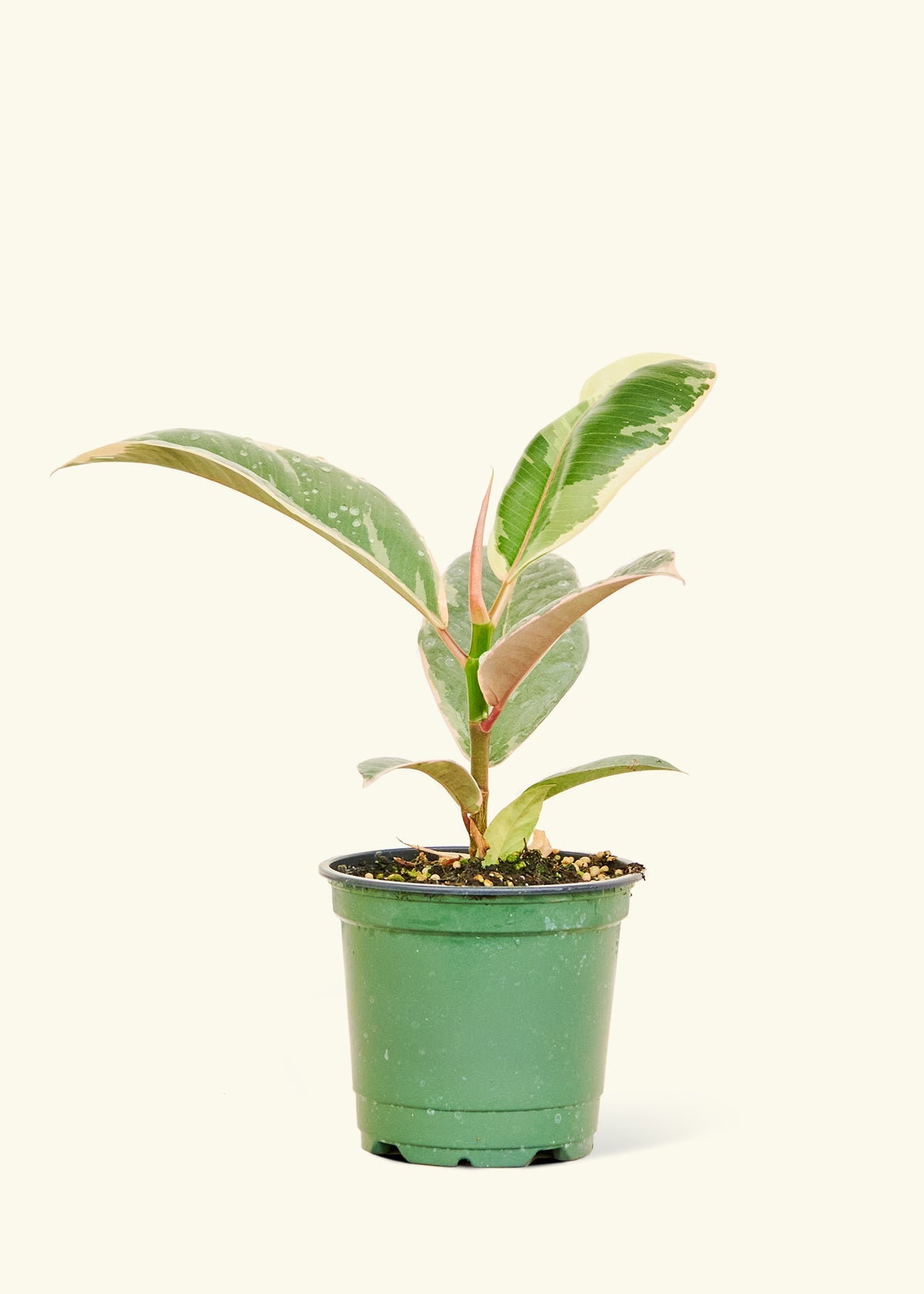
The Ficus Tineke (Ficus elastica 'Tineke') is a beautiful, variegated indoor plant with leaves in different hues of cream, green, and pink. It’s a rubber tree plant, and it can grow to about 8-10 ft. in height indoors. This tropical plant is native to Southeast Asia, and grows best in USDA hardiness zones 10-12.
This pink and green leaf plant is relatively easy-care but should be kept out of pets’ reach, as it can be toxic if ingested. The Tineke tree symbolizes abundance, resilience, and wisdom.
Other gorgeous Ficus varieties include the red-tinged Ruby Rubber Tree (Ficus elastica 'Ruby') and the dramatic Burgundy Rubber Plant (Ficus elastica Burgundy).
Ficus Elastica: Benefits
Ficus Elastica Tineke Care: Growing Tips
The charming Tineke rubber tree is easy to grow indoors, even for people new to plants. Here’s what you need to know about Tineke rubber plant care:
Ficus Tineke: Light Requirements & Temperature
- Light: The Ficus Tineke rubber plant adapts to a wide variety of light conditions, although it prefers bright to medium indirect light. This ficus tolerates several hours of direct sunlight in the mornings. Low light causes its foliage to lose its vivid coloring.
- Temperature: Average room temperatures of 60°F-75°F are best for your rubber plant. Avoid exposing your rubber plant Tineke to cold drafts or sudden temperature drops.
Tineke Ficus: Watering & Humidity
- Watering: Water when the top few inches of the soil are dry. It’s best to water less frequently but thoroughly than a little every few days.
- Humidity: The Ficus elastica plant prefers high humidity and appreciates regular misting. It adapts easily to average indoor humidity.
Ficus Tineke Tree: Soil, Fertilizer, and Repotting
- Soil: The best soil for your rubber tree Tineke is a well-draining potting mix with added perlite. Refresh the soil every few years when repotting.
- Fertilizer: Feed your Tineke rubber plant every month with a balanced, water-soluble fertilizer throughout the growing season.
- Repotting: Repot in the spring into a slightly larger container. Repotting is usually necessary every 2-3 years.
Ficus Tineke: Propagation
Ficus Tineke propagation is relatively simple. Take stem cuttings, place them in fresh water, or plant them in moist but well-draining soil. Place the cuttings in bright, indirect light and cover with transparent plastic bags to increase humidity.
Ficus Tineke: Problems and Pruning
Leaf drop is common if your plant is exposed to cold or watered inconsistently. Yellowing leaves often indicate overwatering, while brown leaf tips signal low humidity. Check your Tineke’s foliage for insects or disease. Prune your rubber tree regularly to promote denser growth. Remove dried or damaged branches and leaves.
Tineke Ficus: Companion Plants & Placement Options
Its gently variegated foliage and beautiful, branching shape are only some of the Ficus elastica benefits. Combine with other plants for a luxuriant, tropical look.
Great to Place on
Ficus plants make a spectacular floor plant that adds a tropical ambiance to your space. In warm climates, they’re a perfect foliage plant for sunny porches. These tropical trees are an ideal fit for well-lit rooms with morning sun. They’re best suited for homes without pets.
Ficus Tineke Plant Grows Well With
These plants will make amazing companions for your ficus plant:
- Ficus Audrey: The Ficus Audrey is an airy indoor tree with fresh and relaxing sage green foliage.
- Money Tree: The tropical Money Tree is considered a luck-bringing plant and is easy to recognize because of its quirky, braided trunk.
- Snake Plant Zeylanica: The sturdy, vertical leaves of the Snake Plant Zeylanica are a perfect contrast to the rubber tree’s delicate foliage.
Order Ficus Tineke for Sale From Hey Rooted Now!




 Care level: No sweat
 Light: High
 Not pet friendly
 Water: Once a week