Fiddle Leaf Fig Care Guide
About Fiddle Leaf Fig
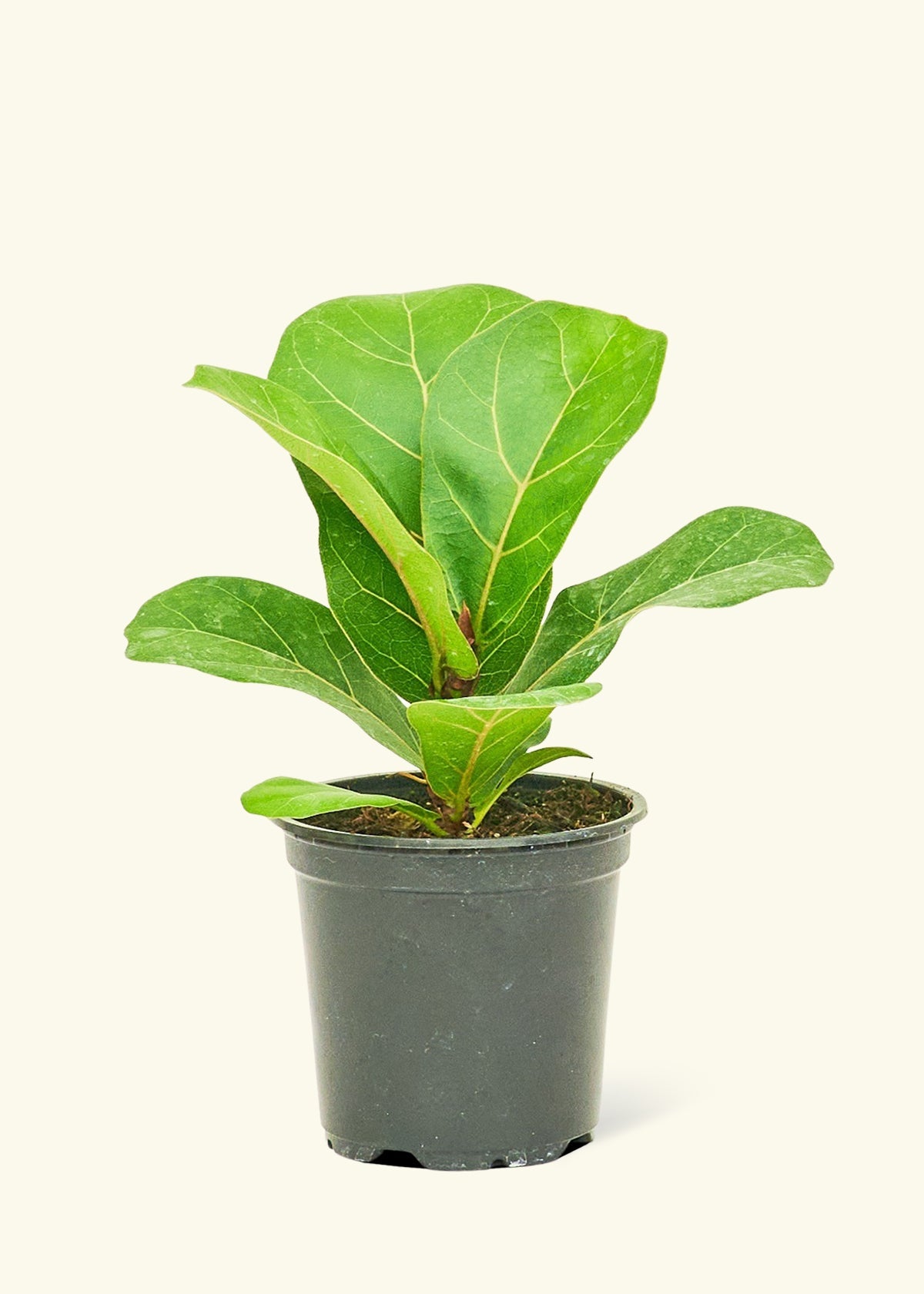
The gorgeous but ‘pretentious’ Fiddle Leaf Fig tree (Ficus lyrata) is an elegant houseplant that belongs to the Moraceae family. This large plant is native to the tropical regions of West Africa and thrives in hardiness zones 9-11. Indoors, it can grow up to 10ft, making a statement instantly in any living room or spacious hall. Ficus lyrata is popular for its longevity, so it can reward you with its lush greenery and vibrancy for many years. Its beautiful green leaves are shaped like a fiddle, hence the name.
Fiddle Leaf Fig plant care is not that easy, and these large indoor trees don’t like being moved. Sudden changes to their environment affect their well-being. Another disadvantage of Fiddle Leaf Figs is that they’re toxic to pets. On the other hand, these gorgeous ficus plants are considered lucky, bringing abundance and great fortune into the home.
Other Ficus varieties include the pink and green leaf Ficus Tineke (Ficus elastica 'Tineke') and the striking Burgundy Rubber Plant (Ficus elastica Burgundy).
Fiddle Leaf Fig: Benefits
- With strong air-purifying qualities
- Attractive, vibrant foliage
- Adds exotic vibe to any space
- An amazing floor plant and perfect focal point
- Makes a great gift, as it’s a lucky plant
Fiddle Leaf Fig Tree Care: Growing Tips
This finicky houseplant requires a little more experience and expertise. As Ficus lyrata care isn’t that straightforward, it’s best to understand this beauty’s growing needs well. Here’s how to care for a Fiddle Leaf Fig:
Fiddle Leaf Fig: Light Requirements & Temperature
- Light: The Ficus lyrata requires several hours of bright sunlight to maintain its vivid-green foliage. Low-light exposure results in leggy growth and pale leaves.
- Temperature: Grow your Ficus lyrata in warm temperatures, ranging from 65°F to 75°F. It’s sensitive to the cold, so protect it from drafts.
Fiddle Leaf Fig: Watering & Humidity
- Watering: Water your Fiddle Fig when the top inches of the soil dry out. Once a week is usually enough.
- Humidity: The Ficus lyrata thrives in moderate to high humidity of 40-60%. Occasional misting can be beneficial.
Fiddle Leaf Fig Tree: Soil, Fertilizer, and Repotting
- Soil: The Fiddle Leaf Fig grows best in a well-draining potting mix; add perlite if required to improve drainage.
- Fertilizer: Feed your Fiddle Fig every month with a balanced, water-soluble fertilizer throughout the spring and summer.
- Repotting: Repot your Ficus lyrata during the spring every 2-3 years or when you notice that the tree has outgrown its container.
Fiddle Leaf Fig: Propagation
Fiddle Leaf Fig propagation can be done easily from stem cuttings. Root them in soil or water to multiply your mature ficus plant. If propagating the cuttings in water, change the water once a week until roots develop. Then plant the baby figs in pots with well-draining soil and keep them somewhere warm and humid, with sufficient sunlight.
Fiddle-Leaf Fig: Problems and Pruning
Common issues with your Fiddle Leaf Figs include yellow leaves, root rot, stunted growth, and pests. Remember that moving this plant to a new location can stress it and cause problems such as leaf drop. Another mistake plant parents make is giving their Ficus lyrata too much strong sunlight. Although Fiddle Figs thrive in brighter conditions, you should protect them from sunburn that results in brown leaf edges or tips. Trim any damaged foliage promptly to encourage new growth.
Fiddle Fig: Companion Plants & Placement Options
The Ficus lyrata grows well with many exotic houseplants that require similar growing conditions. It brings a tropical vibe to interior spaces, whether as a standalone plant or as part of a group of houseplants.
Great to Place on
The Fiddle Leaf Fig is an instant conversation starter when displayed as a statement plant on the floor. These tropical trees require space, so place yours in a large living room or in the entry hall. Its air-filtering benefits also make it a great addition to your bedroom.
Fiddle Leaf Fig Plant Grows Well With
- Ficus Ruby: The pink-hued foliage of the stunning Ficus Ruby is a great contrast against the glossy, green leaves of Ficus lyrata.
- Money Tree: The lucky braided Money Tree is a beautiful companion plant to the Fiddle Leaf Fig; it adapts well to varied light conditions.
- Orange Bird of Paradise: Both Ficus lyrata and the Orange Bird of Paradise thrive in direct sunlight, so you can grow them together to create a lush indoor jungle.
Get Fiddle Leaf Fig for Sale From Hey Rooted Now!




 Care level: Extra love
 Light: High
 Not pet friendly
 Water: Twice a month


