Aloe Vera Care Guide
About Aloe Vera Plants
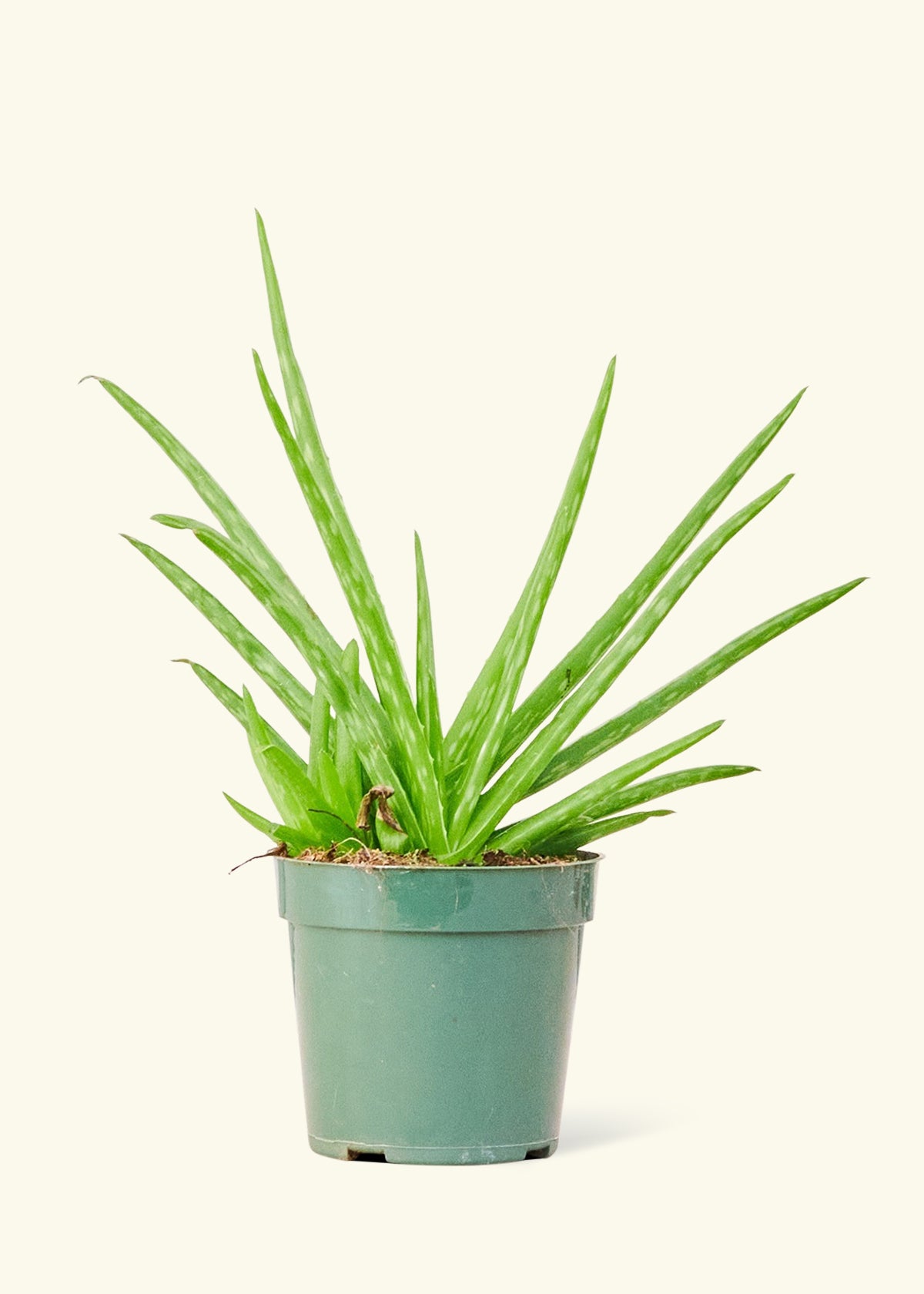
Did you know that Aloe Vera is one of the most recognized and widely grown succulents in the world? This hardy plant features thick, fleshy green leaves, which store water, making it resistant to droughts.
Aloe Vera plants are grown worldwide, but are native to the Arabian Peninsula. They thrive in USDA hardiness zones 9–11 if planted outside, but can adapt easily as houseplants indoors in cooler climates. As a drought-tolerant succulent, the Aloe Vera plant is ideal for beginner gardeners or busy plant lovers.
This plant is mildly toxic to pets if ingested, so keep it out of reach of your furry friends. Aloe Vera symbolizes healing, protection, and good fortune.
Aloe Vera Benefits
- Low-maintenance and beginner-friendly
- Compact growth is ideal for small spaces
- A natural air-purifier, which releases oxygen at night
- Long lifespan with the right care
- Popular choice and a great gift
Aloe Vera Care: Growing Tips
Aloe Vera plant care is straightforward, making this plant ideal for people with busy schedules. Once you understand how to care for an Aloe Vera plant, you’ll find it to be one of the easiest succulents to maintain.
Aloe Vera: Light Requirements & Temperature
- Light: Place your Aloe vera in a spot with bright, indirect sunlight, though it can tolerate some direct morning sunlight.
- Temperature: This succulent thrives in a temperature range of 65–85°F. Protect it from frost and cold drafts.
Aloe Vera: Watering & Humidity
- Watering: If you’re wondering how often to water Aloe Vera plant, once every 10 days is usually sufficient; allow the soil to dry out completely between waterings.
- Humidity: Medium humidity works best for Aloe Vera plants. Since this succulent stores water in its leaves, it does not require misting.
Aloe Vera: Soil, Fertilizer, and Repotting
- Soil: The best soil for Aloe Vera is a well-draining cactus or succulent mix, which helps prevent root system problems.
- Fertilizer: Feed lightly during spring and summer with a diluted succulent fertilizer. You don’t need to fertilize in fall and winter.
- Repotting: Repot your Aloe Vera plant every 2–3 years. Ensure the new pot has enough drainage holes.
Aloe Vera: Propagation
Learning how to propagate Aloe Vera is simple and rewarding. Separate the offsets, often called pups, that grow around the base of the mother plant. Plant them with their roots intact in well-draining soil and place the pots in bright but filtered light.
Aloe Vera Plant: Common Problems
Although resilient, the Aloe Vera plant can develop soft, mushy leaves from overwatering, which is the most common mistake in Aloe Vera plant care. So, always water deeply but infrequently. Brown tips from too much direct sunlight can be another issue. If leaves become damaged, cut them off with clean scissors to promote new growth.
Aloe Vera: Companion Plants & Placement Options
Pair your Aloe Vera plant with other drought-tolerant houseplants or grow it as a focal point in your living or office space.
Great to Place on
Place a small Aloe Vera plant on a sunny windowsill, desk, or kitchen counter where it can receive bright light. A larger Aloe Vera is best displayed as a statement plant on the floor or a bedside table.
Aloe Vera Grows Well With
- African Milk Tree: The tall African Milk Tree contrasts nicely with the rosette form of Aloe Vera. Both prefer bright light and well-draining soil, making them ideal companion plants.
- Peruvian Apple Cactus: The striking Peruvian Apple Cactus adds height to arrangements featuring an Aloe Vera plant. They are both drought- resistant and easy to care for.
- Fairy Castle Cactus: With its whimsical, castle-like look, the Fairy Castle Cactus pairs perfectly with the bushy Aloe Vera plant.
Order an Aloe Vera Plant for Sale at Hey Rooted Today!




 Care level: No sweat
 Light: Direct
 Not pet friendly
 Water: Once a month


